
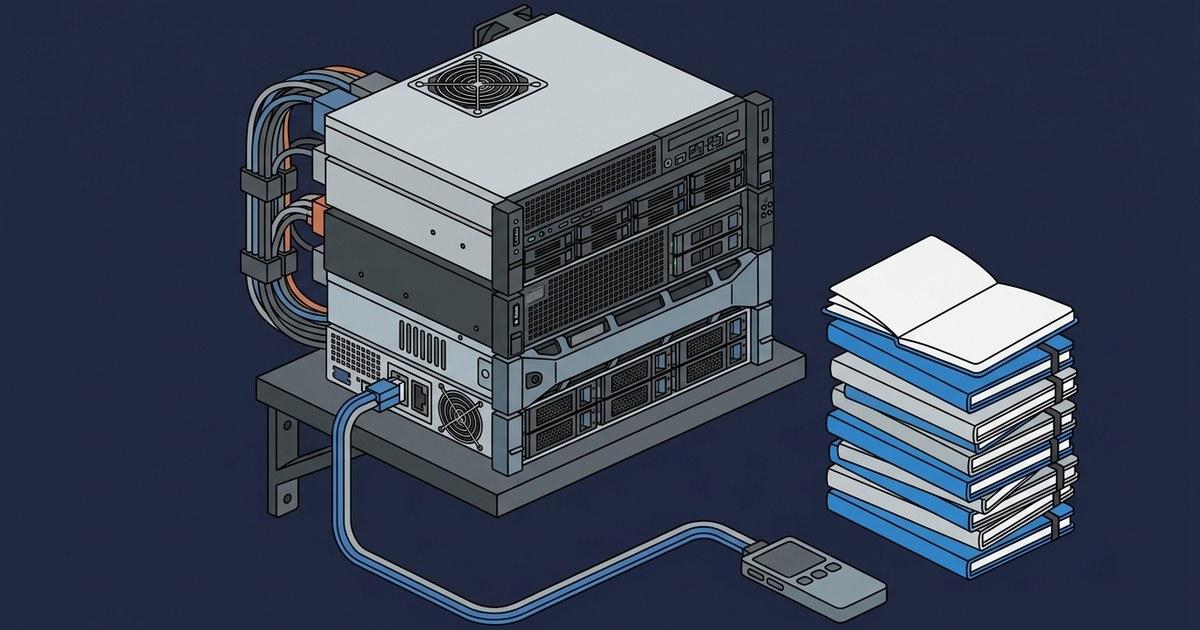

Hermes Agent is an open-source AI agent built by Nous Research and released under the MIT license. It runs as a long-lived assistant on a small server or your own infrastructure, connects to whichever language model you choose, and talks to you through Slack, Telegram, Discord, WhatsApp, a terminal, or the Hermes Desktop app. Its distinguishing feature is a built-in learning loop: it turns experience into reusable skills, keeps notes on what it learns, and builds a model of the person it works for across sessions.
VantaSoft runs its own operations on Hermes Agent and deploys it for customers as a managed service, so this explainer comes from daily use, not a product page. Facts about the software below are taken from the official documentation and the public repository as of September 2026.
What Hermes Agent actually is
Most AI tools a business meets are chat windows: you type, it answers, the conversation ends. Hermes Agent is a different shape. It is a process that stays running, holds tools it can use (a terminal, files, web access, integrations you grant), remembers across conversations, and can be reached from the messaging apps your team already uses.
Three properties from the documentation matter most for a business reader:
- Self-improving. It creates skills from experience, improves them during use, and prompts itself to persist what it learns, so a task it did last month is easier this month.
- Model-agnostic. It works with Nous Portal, OpenRouter, OpenAI, or your own model endpoint, and switching models is a configuration change rather than a rebuild.
- Runs anywhere. The project describes running on a $5 VPS, a GPU cluster, or serverless infrastructure that costs almost nothing when idle. It is not tied to a laptop.
Hermes Agent vs the alternatives you have probably heard of
| Option | What it is | Where it runs | Learning across sessions | License and cost |
|---|---|---|---|---|
| Hermes Agent | Open-source agent runtime with tools, memory, skills, and messaging integrations | Your VPS, cloud, or serverless; also a desktop app | Built-in loop: skills, memory, user model | MIT license, free software; you pay for the model and hosting |
| Claude Code and similar coding agents | Developer-focused agents for working in a codebase | Developer's machine or CI | Project context, mainly | Vendor-priced, tied to one model provider |
| n8n and workflow builders with agent nodes | Visual automation platform that can call a model inside a workflow | Cloud or self-hosted | No; each run starts from the workflow definition | Open-core, paid cloud tiers |
| Hosted agent platforms | Vendor-run agent builders with a web UI | Vendor's cloud | Varies by vendor | Monthly subscription per seat or per agent |
The practical difference: workflow tools are strongest when the steps are known in advance and rarely change. An agent runtime like Hermes is strongest when the work involves judgment, tools, and conversation, and when you want the assistant to get better at your specific business over time.
What Hermes Agent costs
The software is free under the MIT license. What you pay for is what it consumes:
- Hosting. The documentation's own example is a $5 per month VPS for a single agent. Heavier workloads or many agents cost more.
- Model usage. Billed per token by whichever provider you choose. A moderate workflow running a thousand times a month on a mid-tier model is on the order of tens of dollars; see our AI agent development cost guide for worked numbers.
- Setup and operation. Someone has to install it, connect the tools and channels, grant access safely, and watch it run. That is either your team's time or a managed service fee.
When a business should run Hermes Agent
Good fit:
- You want an assistant reachable from Slack or Telegram that can actually do things: read a mailbox, update a board, run a report, draft a document, check a system.
- You want the assistant to improve at your business, not start from zero every session.
- You care about choosing your own model provider and keeping the option to switch.
- You want to own the runtime rather than rent a vendor's builder.
Poor fit:
- Your need is a single, fixed, high-volume pipeline with no judgment in it. A workflow tool is simpler and cheaper.
- Nobody on your side will own access, testing, and review. An agent with tools needs deliberate access boundaries.
How to get started
For a technical team, the installation guide covers the desktop installer for Windows and macOS and a one-line command-line install for Linux, macOS, WSL2, and Android. The realistic first project is one workflow with one channel, run for a month, with a named person reviewing what the agent does. How to implement an AI agent in your business walks through that rollout.
For a business without a technical team, the managed route is to have someone build, host, and operate the agents for you. That is what VantaSoft does: we design the workflows, run Hermes Agent on managed infrastructure, connect it to your systems, and keep it running, from $200 a month with setup scoped during discovery.
Frequently asked questions
Is Hermes Agent free?
Yes. It is open source under the MIT license. You pay for the language model usage and the server it runs on, and for the time or service to set it up and operate it.
What models does Hermes Agent use?
Any provider you configure: Nous Portal, OpenRouter, OpenAI, or your own endpoint. Switching models is a command, not a rebuild.
Does Hermes Agent run locally?
It can run on your own hardware or a private server. The project's own examples range from a $5 VPS to a GPU cluster, and there is a desktop application for Windows and macOS.
Is Hermes Agent secure enough for business data?
The runtime is yours to host, which keeps data on infrastructure you control. Security then depends on how you grant tool access, manage credentials, and review actions. Treat those as the real project.
If you want Hermes Agent working inside your business without standing up the infrastructure yourself, bring the one workflow you would automate first and we will scope it.