

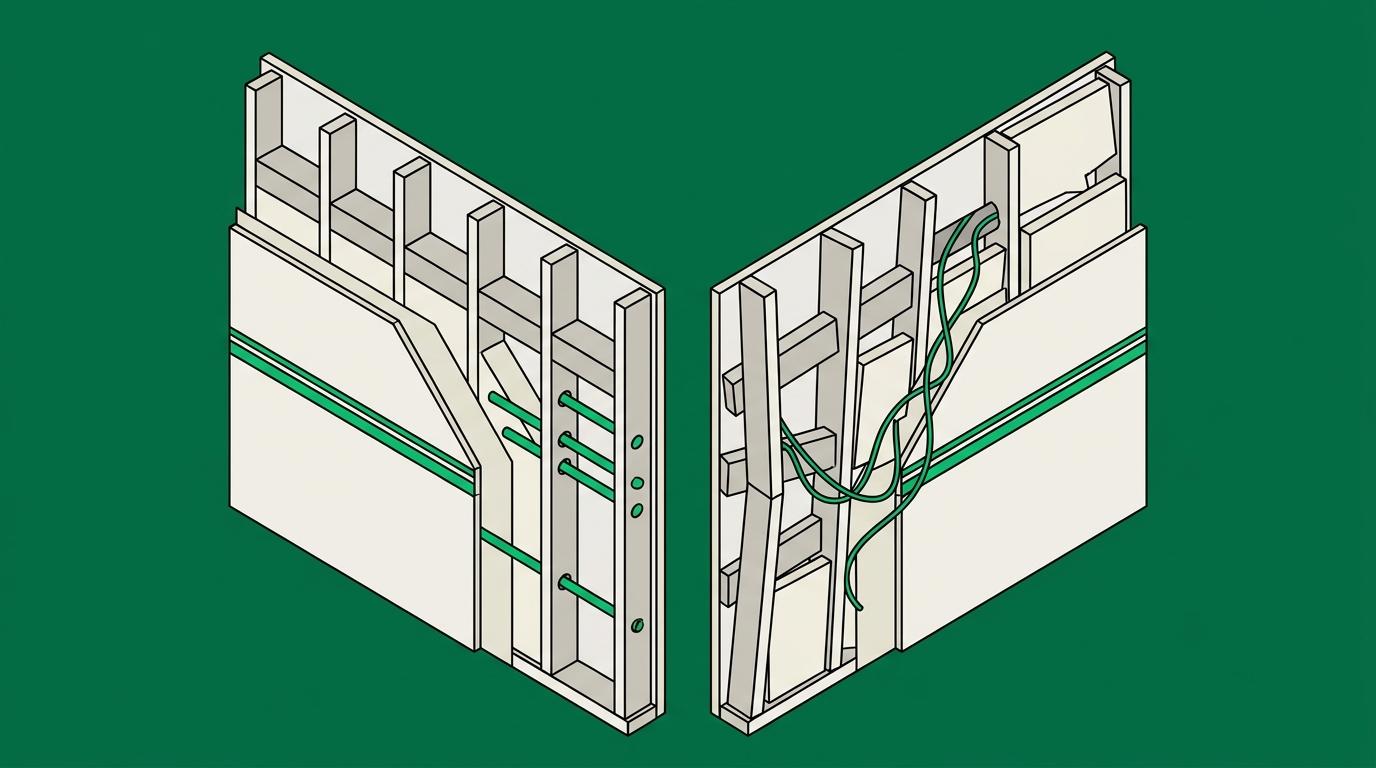

AI will not replace software developers. But it is already changing which developers are valuable and which are exposed. As AI coding assistants become standard tools in every engineering workflow, they accelerate output for everyone. That acceleration makes the gap between skilled developers and mediocre ones wider, more visible, and more expensive than it has ever been.
If you manage a technical team or rely on an external development partner, this shift changes how you should evaluate the people writing your software. Speed is no longer the differentiator. Judgment is.
Will AI Replace Developers? What the Data Actually Says
The short answer: no. Demand for software developers has increased 34% since AI coding assistants became mainstream, according to job market data tracked through early 2026. The U.S. Bureau of Labor Statistics projects 17% growth in software development roles through 2033. Overall software engineering postings are up 11% year over year.
The fear that AI would eliminate developer jobs has not materialized. What has materialized is a restructuring of what the job requires. AI handles boilerplate, repetitive patterns, and first-draft code generation well. It does not handle system architecture, subtle debugging, security analysis, or translating ambiguous business requirements into working systems.
The developers who thrive are the ones who use AI to amplify good judgment. The developers who struggle are the ones whose primary value was typing speed and pattern recall. AI commoditized those skills overnight.
How AI Exposes Bad Developers
Before AI tools, a mediocre developer could hide behind activity. They shipped code. It looked reasonable in pull requests. Problems surfaced weeks or months later, often after the developer had moved on to another project or another job.
AI changes that dynamic in three ways:
1. Speed removes cover. When everyone can generate code quickly, the bottleneck shifts from writing code to evaluating code. A developer who produces fast output but cannot assess whether that output is correct, secure, or maintainable is now visibly behind. According to a 2026 survey of senior site-reliability and DevOps leaders, 43% of AI-generated code changes require manual debugging in production, even after passing QA and staging tests. Zero percent of engineering leaders described themselves as "very confident" that AI-generated code will behave correctly once deployed.
2. Output volume amplifies mistakes. AI lets developers ship more code in less time. For a skilled developer, this means more features delivered with fewer bugs. For an unskilled developer, this means more bugs delivered faster. The compounding effect is brutal: bad code created at AI-assisted speed creates technical debt at AI-assisted speed.
3. The quality gap becomes measurable. When two developers on the same team both use AI tools but produce dramatically different outcomes in production stability, incident frequency, and code review feedback, the difference is no longer ambiguous. It is data.
What Changed for Junior Developers
The most visible impact is on entry-level roles. Junior developer job postings dropped 60% between 2022 and 2024. Employment for developers aged 22 to 25 declined 20% over the same period.
This does not mean junior developers are obsolete. It means the path to becoming a productive developer has changed. Companies are less willing to hire developers whose primary contribution is writing straightforward code that AI can now generate. The junior roles that remain require stronger fundamentals: understanding systems, reading existing codebases, debugging complex interactions, and knowing when AI-generated suggestions are wrong.
For companies that rely on external development partners, this trend matters. A team that leans heavily on junior developers using AI tools without senior oversight is a team generating risk, not value.
Good Developers vs. Bad Developers in the AI Era
AI tools do not change the fundamental difference between skilled and unskilled engineering. They make the difference harder to ignore.
| Dimension | Skilled Developer + AI | Unskilled Developer + AI |
|---|---|---|
| Code output | More features, fewer bugs, cleaner architecture | More code, more bugs, faster technical debt accumulation |
| AI-generated code review | Catches errors, rewrites weak suggestions, understands tradeoffs | Accepts suggestions uncritically, ships without evaluating |
| Debugging | Uses AI to narrow hypotheses, applies domain knowledge to verify | Relies on AI to guess, escalates when it cannot |
| Architecture decisions | AI accelerates implementation of sound designs | AI generates plausible but fragile structures |
| Production stability | Fewer incidents, faster resolution | More incidents shipped faster, harder to trace |
| Long-term cost | Lower total cost of ownership | Higher cost: more rework, more incidents, more senior time spent fixing |
What This Means for Non-Technical Founders
If you are a founder or business leader who relies on a development team or agency to build your software, AI has not made your evaluation job easier. It has made it more important.
Three things to watch for:
Ask about code review practices. A team that uses AI to write code but does not have rigorous review processes is a team that ships bugs faster. Good teams treat AI-generated code with the same scrutiny they apply to code written by a junior developer: review everything, trust nothing by default.
Look at production metrics, not velocity. A team that ships features quickly but has frequent production incidents, slow bug resolution, or recurring regressions is not performing well. AI can inflate velocity metrics while quality degrades. Ask for incident rates, mean time to resolution, and deployment rollback frequency.
Evaluate the senior-to-junior ratio. AI makes senior developers more productive. It does not make junior developers senior. A team that uses AI as a substitute for experienced engineers rather than a force multiplier for them is cutting corners in a way that will compound.
Why This Is a Business Problem, Not a Technology Problem
The conversation about AI replacing developers is usually framed as a technology question. Will the tools get good enough? When will AI write production-quality code without human oversight?
That framing misses the point. Software engineering has never been primarily about writing code. It has always been about making decisions under uncertainty: which problems to solve, how to structure systems, what tradeoffs to accept, when to invest in quality versus speed. AI does not make those decisions. People do.
The businesses that benefit most from AI in software development are the ones that already have strong technical judgment in place. AI amplifies whatever capability already exists. If the capability is strong, outcomes improve. If the capability is weak, failures arrive faster and at greater scale.
Frequently Asked Questions
Will AI replace software developers entirely?
No. Job demand for software developers has increased since AI coding tools became mainstream. The Bureau of Labor Statistics projects 17% growth in software development roles through 2033. AI changes what the job requires but does not eliminate the need for human judgment, architecture decisions, and business context translation.
How can I tell if my development team is using AI well?
Look at outcomes, not activity. A team using AI well will show stable or improving production quality, faster delivery without more incidents, and strong code review practices. A team using AI poorly will ship faster but accumulate bugs, regressions, and technical debt.
Should I be concerned about AI-generated code quality?
Yes, if there is no review process in place. A 2026 survey found that 43% of AI-generated code changes required production debugging after passing QA. AI-generated code needs the same scrutiny as code written by any team member. The risk is not AI itself. The risk is teams treating AI output as trusted by default.
Is it still worth hiring junior developers?
Yes, but the role has changed. Junior developers in 2026 need stronger fundamentals than before: the ability to read and understand existing systems, debug complex interactions, and critically evaluate AI suggestions. Companies that use AI tools as a substitute for mentorship and experience create fragile teams.
How does this affect choosing a development partner?
It raises the bar. A development partner that relies on AI to compensate for a lack of senior expertise is a liability. Look for teams with strong senior engineers who use AI as a productivity tool, not a replacement for judgment. Ask about their code review process, production incident rates, and how they evaluate AI-generated output.
The Bottom Line
AI is not replacing developers. It is replacing the illusion that all developers are interchangeable. The gap between good engineering and bad engineering has always existed. AI just made it impossible to ignore.
For business leaders, the takeaway is simple: invest in technical judgment. Whether that means hiring experienced engineers, choosing a development partner with senior-level oversight, or building review processes that catch AI-generated mistakes before they reach production. The companies that treat AI as an amplifier for skilled teams will build better software faster. The companies that treat it as a substitute for skill will discover the cost of that mistake at production speed.