

You are in a kickoff meeting. You have spent weeks thinking about your product. You know exactly what you want. And then you say the sentence that will cost you half a million dollars:
"We want something like Uber, but for dog walkers."
Everyone nods. The meeting ends. And from that moment on, you and your technical team are building two completely different products.
What You Meant vs. What They Heard
When you said "like Uber," you meant: I want a clean booking flow where a customer can request a service, see who is available, and pay through the app. That is a reasonable product. It is well within reach for a funded startup or a growing SMB. It is maybe a few months of focused development.
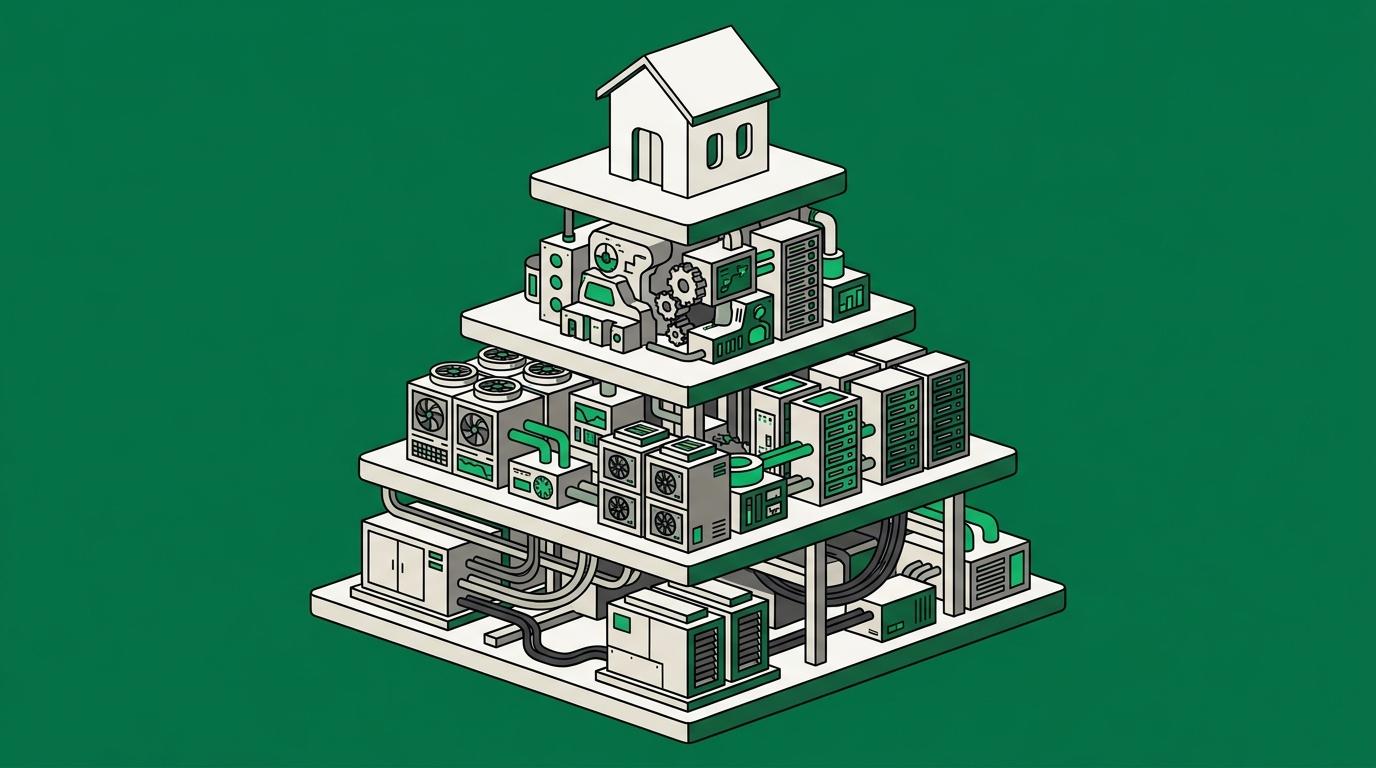
When your technical team heard "like Uber," they started scoping: real-time GPS tracking with sub-second location updates, a matching algorithm that optimizes for distance and availability simultaneously, surge pricing logic that adjusts rates based on demand density, a dual-sided rating system, push notification infrastructure, in-app messaging, payment processing with split payouts to contractors, background checks integration, driver onboarding flows, admin dashboards, analytics pipelines, and a support ticket system. That is not a few months of focused development. That is Uber. Uber has thousands of engineers and has spent billions of dollars building what you just referenced in one sentence.
The gap between what you meant and what they heard is where six-figure budget overruns are born.
Why This Keeps Happening
Reference apps feel like they make communication easier. You point at something that already exists and say "like that." It feels precise. It feels efficient. You assume the other person will extract the relevant parts and ignore the rest.
They will not. A technical team cannot read your mind about which 10% of Uber you actually care about. Their job is to take what you said and turn it into a system that works. If you said "like Uber," they are going to scope something that does what Uber does. Not because they are padding the estimate. Because you told them to.
This is not a failure of listening. It is a structural communication problem. The person describing the product thinks in outcomes: "customers book a service easily." The person building the product thinks in systems: "what does the booking system need to handle, and what happens when it fails?" When you bridge those two perspectives with a reference to a product that has hundreds of features, the systems thinker has no way to know which features you consider essential and which ones you have never even thought about.
The Real Numbers Behind the Reference
Here is what some of those "like Uber" features actually cost to build from scratch, in rough order-of-magnitude terms:
Real-time GPS tracking with live map updates. $80K to $150K. You need a websocket infrastructure, a geolocation pipeline, map tile rendering, and battery-efficient mobile location polling. Most founders who say "like Uber" do not actually need real-time tracking. They need a status indicator that says "your dog walker is on the way."
Matching algorithm. $50K to $120K. Uber's matching engine considers distance, estimated arrival time, driver ratings, ride type, surge multiplier, and dozens of other signals. If you just need "assign the closest available person," that is a database query, not a matching algorithm.
Surge pricing. $40K to $80K. Dynamic pricing that responds to real-time demand requires a data pipeline, a pricing model, and careful UX so customers do not feel cheated. Most early-stage products do not need dynamic pricing at all. They need a price list.
Split payment processing with contractor payouts. $30K to $60K. Stripe Connect or similar handles the plumbing, but the compliance, tax reporting, and edge cases (refunds, disputes, delayed captures) add real complexity. If you are paying your team a salary, this entire line item disappears.
Add those up and you are looking at $200K to $400K in development cost for features that were implied by a reference, not requested by a requirement. The product you actually wanted might cost $60K to $100K.
How to Brief a Technical Team Instead
The fix is not to stop referencing other products entirely. References are useful as visual shorthand. The fix is to never let a reference stand alone as a requirement.
Here is what works:
Describe the outcome, not the product. "A customer should be able to book a dog walker within 30 seconds and know when they are arriving" is a requirement. "Like Uber" is not.
Name what you do not need. Exclusions are more valuable than inclusions when you are scoping. "We do not need real-time GPS. A text notification when the walker starts and finishes is enough" saves your team weeks of work they would have otherwise assumed was required.
Show the workflow, not the screen. Walk through what happens step by step from the customer's perspective. "They open the app, see available walkers this week, pick a time slot, enter payment, and get a confirmation email." That is five steps. Your team can estimate five steps. They cannot estimate "like Uber."
Ask what assumptions they are making. After the brief, ask your technical team to list what they think you want. You will be surprised how much they inferred that you never intended. Catching those assumptions before development starts is free. Catching them after three months of building is not.
The Conversation That Should Have Happened First
The deepest version of this problem is not about briefing technique. It is about who is in the room when the product is being defined.
If you are a non-technical founder briefing a development team, you are essentially translating a business vision into a technical specification by yourself. That is a skill most founders do not have, and there is no reason they should. The translation is where the most expensive mistakes happen, not the development itself.
A technical partner, someone with senior technical judgment who understands both the business goal and the system that needs to support it, catches the "like Uber" trap before it makes it into a scope document. They ask "what are you actually trying to achieve?" before they ask "what do you want us to build?" And the answer to that first question almost always leads to a simpler, cheaper, faster product than the one you would have gotten by pointing at a billion-dollar app and saying "like that."
That is the conversation VantaSoft has with every client before a single line of code is written. If your next product brief has the words "like Uber" or "like Airbnb" or "like Shopify" in it, and nobody in the room is asking what you actually mean by that, the most expensive part of your project has already started.