

At some point, every founder asks the same question: should we build custom software or buy something off the shelf? It sounds like a binary choice. It is not. And the way most people frame the question almost guarantees they will get the answer wrong.
The problem is not that build-vs-buy is a hard question. The problem is that it is the wrong question. "Should we build or buy?" treats the decision as a single fork in the road. In reality, most businesses end up doing both, and the skill is knowing which parts deserve which treatment.
When Buying Is the Right Call
If the problem you are solving is common, the answer is almost always buy. Accounting, CRM, email marketing, project management, payroll, invoicing, customer support ticketing. These are solved problems. Thousands of companies have spent years and tens of millions of dollars building mature, well-tested tools that do exactly these things.
Building your own version of a solved problem is one of the most expensive mistakes a company can make. You are not just paying for the initial development. You are paying for ongoing maintenance, security patches, compliance updates, feature requests from your own team, and the opportunity cost of every engineer who works on your internal CRM instead of your actual product.
The test is simple: if you swapped your current tool for a competitor's tool and your customers would not notice, you are in commodity territory. Buy, do not build. Spend your engineering budget on something that actually differentiates your business.
When Building Is the Right Call
Building makes sense when the way your system works IS your competitive advantage. When the workflow itself is the product, or when the workflow is so specific to your business that no off-the-shelf tool can support it without painful workarounds.
Here are the signals that custom software is the right investment:
You are spending more time working around the tool than working in it. If your team has built an elaborate system of spreadsheets, Zapier automations, and manual copy-paste routines to bridge the gaps in your current SaaS tool, you have outgrown it. The workarounds are costing you more than a custom build would, and they are getting worse over time.
The process is what makes you different. If your logistics routing, your underwriting model, your matching algorithm, or your fulfillment workflow is the reason customers choose you over competitors, that process should not live inside someone else's platform. You need to own it, evolve it, and protect it.
You need data and systems to talk to each other in ways no integration supports. Most SaaS tools integrate with each other, but integrations are designed for common use cases. If your business requires three systems to share data in real time with custom business logic applied at every handoff, you are asking integrations to do something they were not built for.
Your scale or compliance requirements have outgrown what a SaaS vendor can offer. At a certain volume, or in certain regulated industries, the constraints of a shared platform become real. If you need to control where your data lives, how it is processed, and who can access it at a level your SaaS vendor cannot guarantee, building is the path forward.
The Hidden Third Option
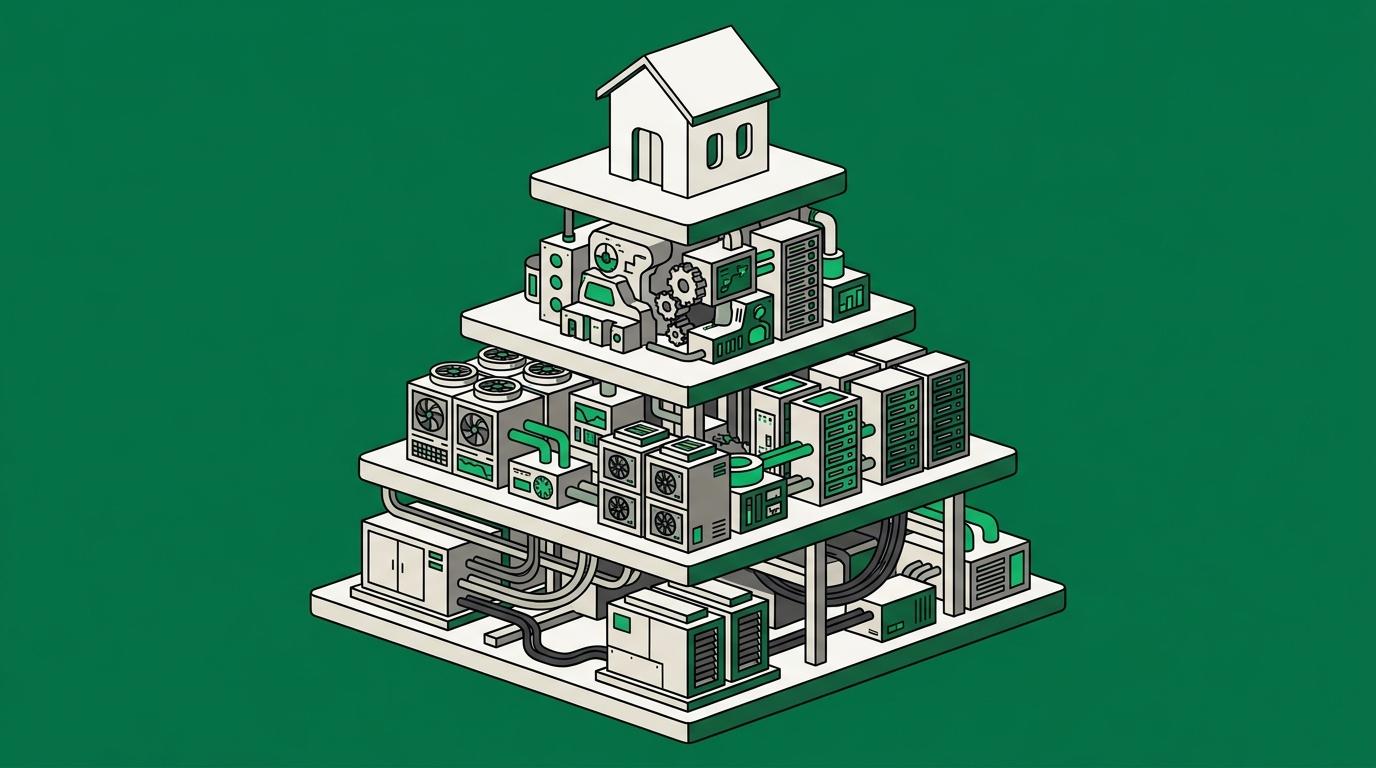
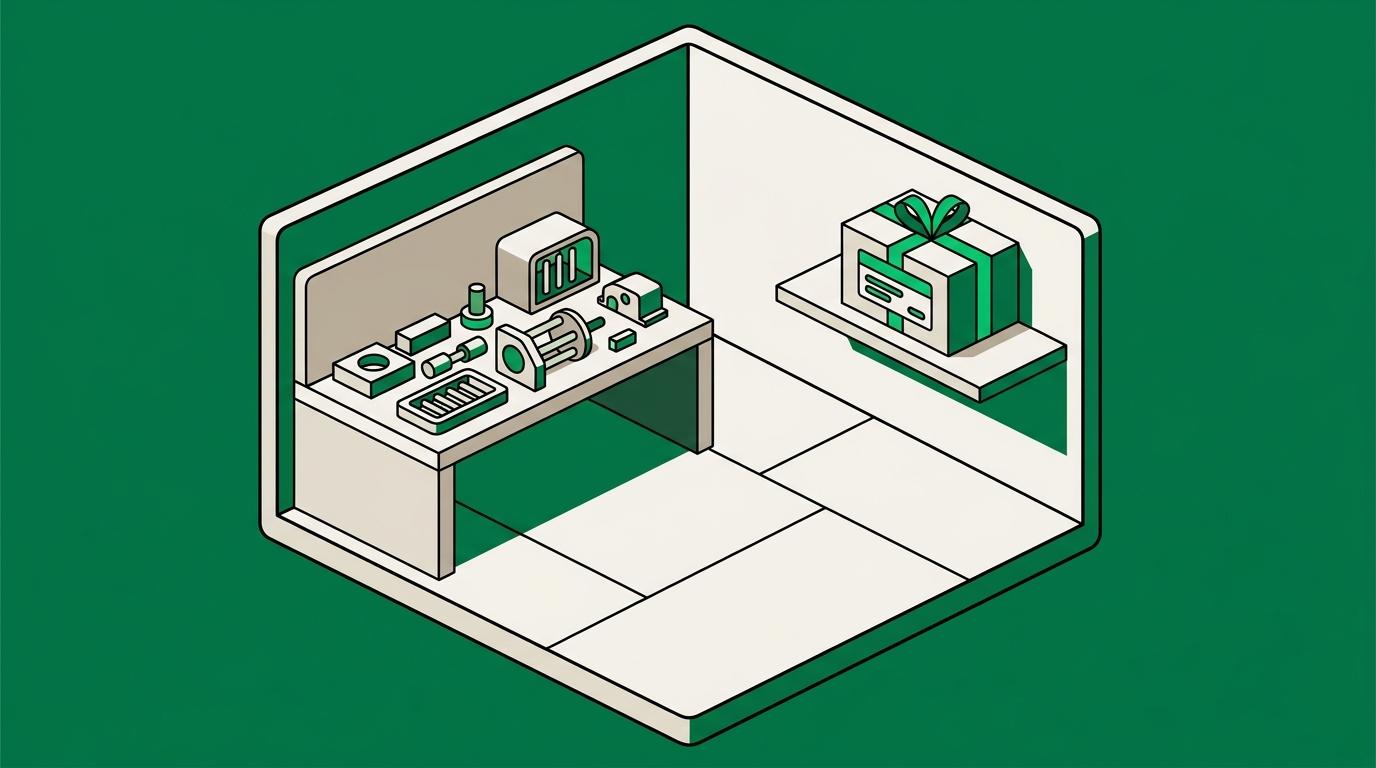
Most founders think of build-vs-buy as a binary. In practice, the best answer is almost always a hybrid: buy the 80% that is commodity, build the 20% that is your edge.
Use Stripe for payments. Use Twilio for messaging. Use a managed database. Use an off-the-shelf auth provider. These are infrastructure problems that someone else has already solved better than you will. Do not rebuild them.
Then build the layer on top that makes your business work the way only your business works. The custom workflow, the proprietary logic, the unique user experience that your customers actually care about. That is the 20% where engineering investment compounds.
This sounds obvious in the abstract. In practice, it is remarkably hard to draw the line. Founders who are not technical tend to either overbuild ("we need everything custom") or underbuild ("there is probably a tool for that"). Both mistakes are expensive, and both come from making the decision without enough context about what is technically hard, what is technically trivial, and what already exists.
The Framework
Before committing budget to either building or buying, answer these five questions:
1. Does this process differentiate us from competitors? If yes, lean toward building. If no, lean toward buying. This single question eliminates 80% of bad build decisions.
2. How much time does our team spend working around the current tool? Quantify it. If three people spend five hours a week on workarounds, that is $40,000 a year in labor on a tool that is not working. At that point, a custom solution has a clear ROI.
3. What happens when we 10x our volume? Does the SaaS tool scale with us, or does it break? Does the pricing model stay reasonable, or does it become our largest line item? If the vendor's pricing scales faster than your revenue, building starts to make financial sense even for commodity functions.
4. Who maintains this if we build it? Custom software is not a one-time purchase. It is a living system that needs ongoing attention. If you do not have a plan for who maintains, monitors, and evolves the system after launch, you are not ready to build. This is the question most founders skip, and it is the one that costs them the most.
5. Can we start with buying and migrate later? Sometimes the right answer is buy now, learn what you actually need, and build later when you have real usage data. The SaaS tool becomes your prototype. Just make sure you are not building on a platform that locks your data in, because migrating away from a vendor that holds your data hostage is its own category of pain.
Why This Decision Is Too Important to Make Alone
The build-vs-buy decision sits at the intersection of business strategy and technical architecture. Getting it right requires understanding both what the business needs and what is technically feasible, and most founders only have deep expertise in one of those.
A non-technical founder making this decision alone will default to whatever their last experience was. If they got burned by a bad custom build, they will buy everything. If they got burned by a SaaS tool that could not keep up, they will want to build everything. Neither instinct is reliable, and both lead to expensive corrections later.
This is exactly the kind of decision a technical partner exists for. Not a developer who builds what you tell them to build. A partner with senior technical judgment who looks at your business, your workflows, your growth trajectory, and your budget, and tells you honestly: this part you should build, this part you should buy, and here is why.
At VantaSoft, this conversation happens before any project begins. The outcome is a technology strategy that puts engineering investment where it compounds and keeps commodity functions on platforms that are already better than anything you would build yourself. If you are about to commit six figures to a custom build, or if you suspect your stack of SaaS tools is holding you back, that conversation is the most valuable hour you can spend before writing a check.